
Aanchal Parmar
Product Marketing Manager, Flexprice

Pricing is the part of building a SaaS company that everyone treats as an afterthought and almost everyone gets wrong the first time. Not because it's complicated in theory, but because there's no clean answer.
The right SaaS pricing model depends on what you're building, who you're building it for, and what you're trying to achieve in the next twelve months.
Change any one of those variables and the answer changes too.
I’m not gonna give you here a template for your SaaS pricing strategy. What I will do is walk you through the models actually used by SaaS companies today, how to think through which one fits your business, and how to test your way to the right answer instead of guessing and hoping.
This piece was originally published on 10.10.2025 but this has been updated to maintain the current standards and any changes around SaaS pricing models.
What is a SaaS pricing model?
A SaaS pricing model is how a software company decides to charge for its product. It sets the rules like who pays, how much, and what triggers a charge.
Some companies charge per seat. Others charge based on how much you use. Some do both and that’s what we call hybrid pricing ladies and gentlemen.
The pricing model you pick determines how revenue scales as your customer base grows and whether your billing infrastructure can actually support it.
Here are top seven SaaS pricing models for you in 2026:
Subscription based pricing
Usage based pricing
Credit based pricing
Hybrid pricing
Tiered based pricing
Per seat based pricing
Outcome based pricing
Subscription based pricing
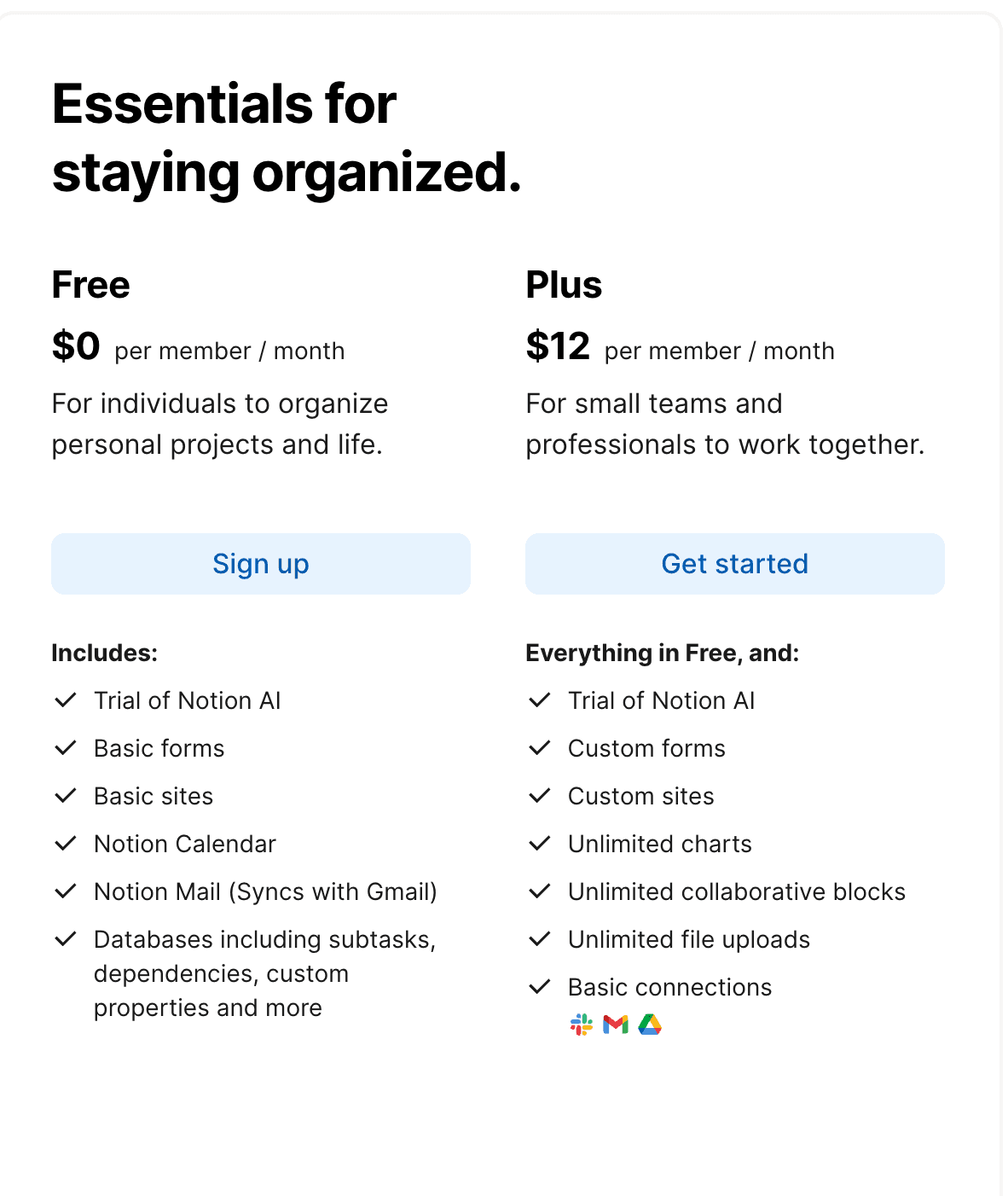
Subscription-based pricing is one of the most common SaaS pricing models, you pay a fixed amount, monthly or annually, regardless of how much you use the product. Think of it like a gym membership, except people actually use SaaS tools.
Most B2B software pricing strategies start their pricing strategy from here. CRMs, project management tools, communication platforms anything where the value is determined through access, not consumption.
Pros:
Predictable revenue for you
Predictable costs for your customer
Finance teams love it because they can predict and forecast your revenue better it gives them predictability
Managing billing and administration part is also easiest here
Cons:
Heavy users get a deal but light users feel ripped off
Neither is great for retention long-term.
Example: Notion and Slack the classics of SaaS software pricing
Usage-Based Pricing
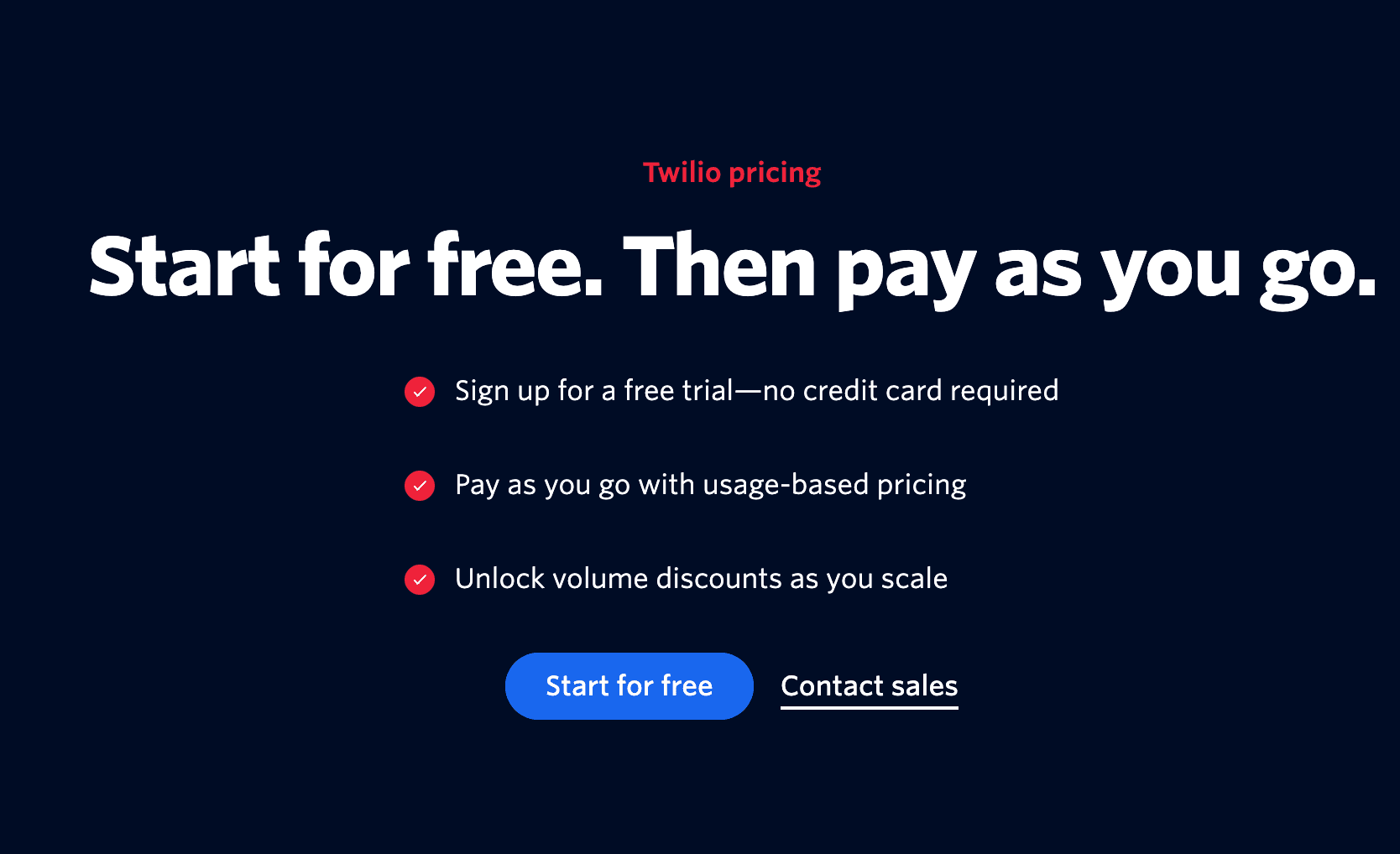
Usage-based pricing is also called metered billing or pay-as-you-go is one of the faster-growing SaaS pricing models right now. With a usage based model you don’t pay for seats rather you pay for what and how much you use. So think like no. api calls, or tokens consumed.
Most AI companies and developer tools run on this model. AWS is the company that introduced usage based pricing with its compute per hour pricing model. Now almost every AI new and old AI company has adopted the pricing model.
Pros:
Customers only pay for what they use, which makes it easier to get them in the door
Revenue scales naturally as usage grows no renegotiating contracts every time a customer doubles their consumption
Lower barrier to entry means faster adoption, especially for developer tools
Cons:
Revenue becomes harder to forecast a slow month for your customer is a slow month for you
Customers with unpredictable workloads get bill shock, and that kills retention
Your finance team will have opinions about this and most of them won’t positive
One of the common examples of usage based pricing models is Twilio. It is a typical pay-as-you-go pricing model.
Credit-Based Pricing
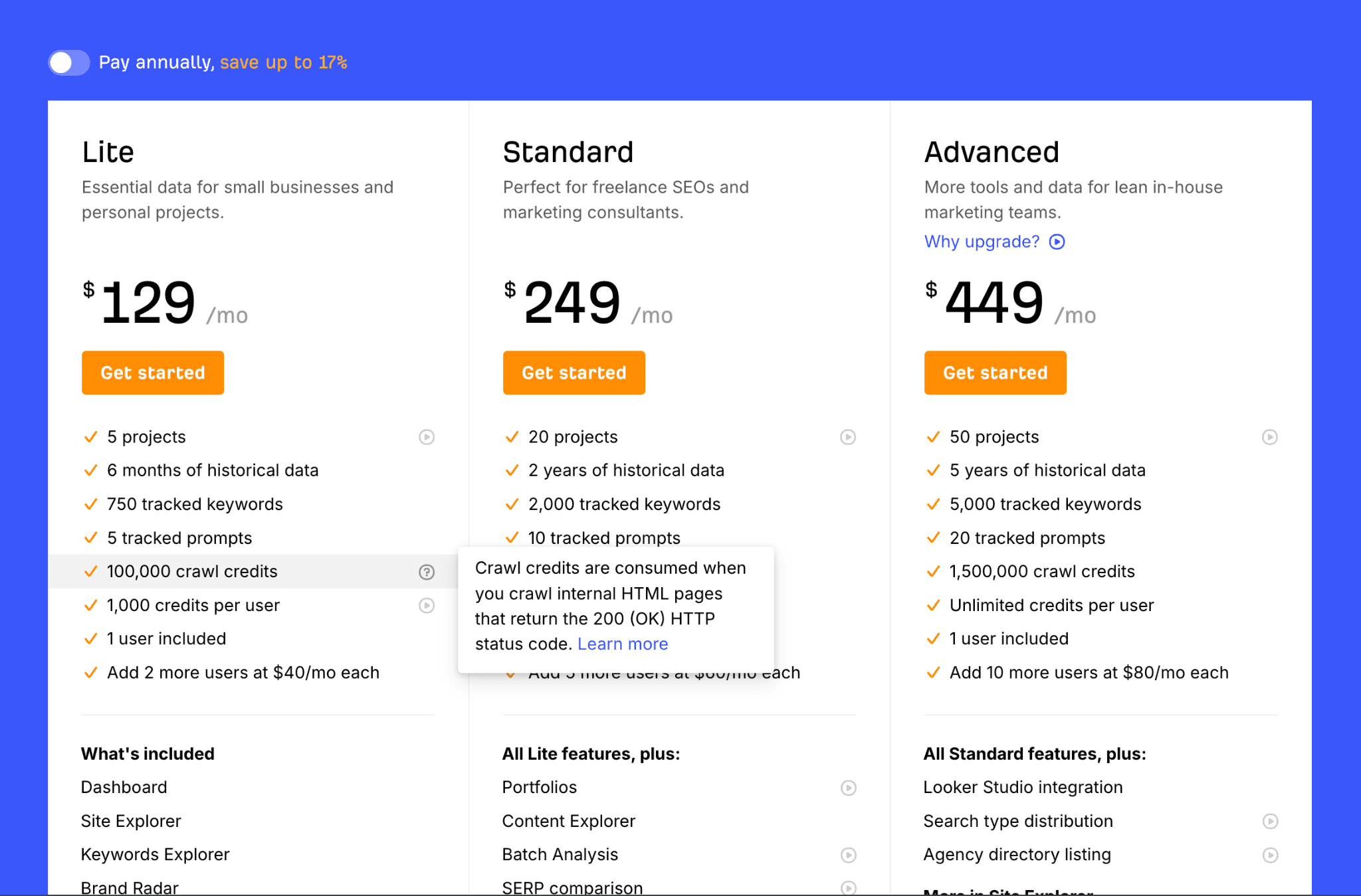
Credit-based pricing is a SaaS pricing model where customers buy credits upfront and spend them as they use the product. One API call might cost 10 credits. A longer compute job might cost 500. You're essentially pre-purchasing consumption in a currency the platform controls.
AI tools and developer platforms love this model. It gives companies cash upfront and gives customers flexibility in how they spend it.
Pros:
Cash collected before the service is delivered, great for your runway
Customers can use credits across different features without needing separate billing logic
Creates a natural upsell moment when credits run low
Cons:
Unused credits sit on your balance sheet as liability until they're consumed
Customers who overbuy and underuse feel burned and they don't come back
Credit-to-value translation can get confusing fast if your pricing isn't airtight
To give you an example, Ahrefs runs entirely on a credit based model and now that I think of, almost every martech tool runs on a credit based model.
Hybrid Pricing
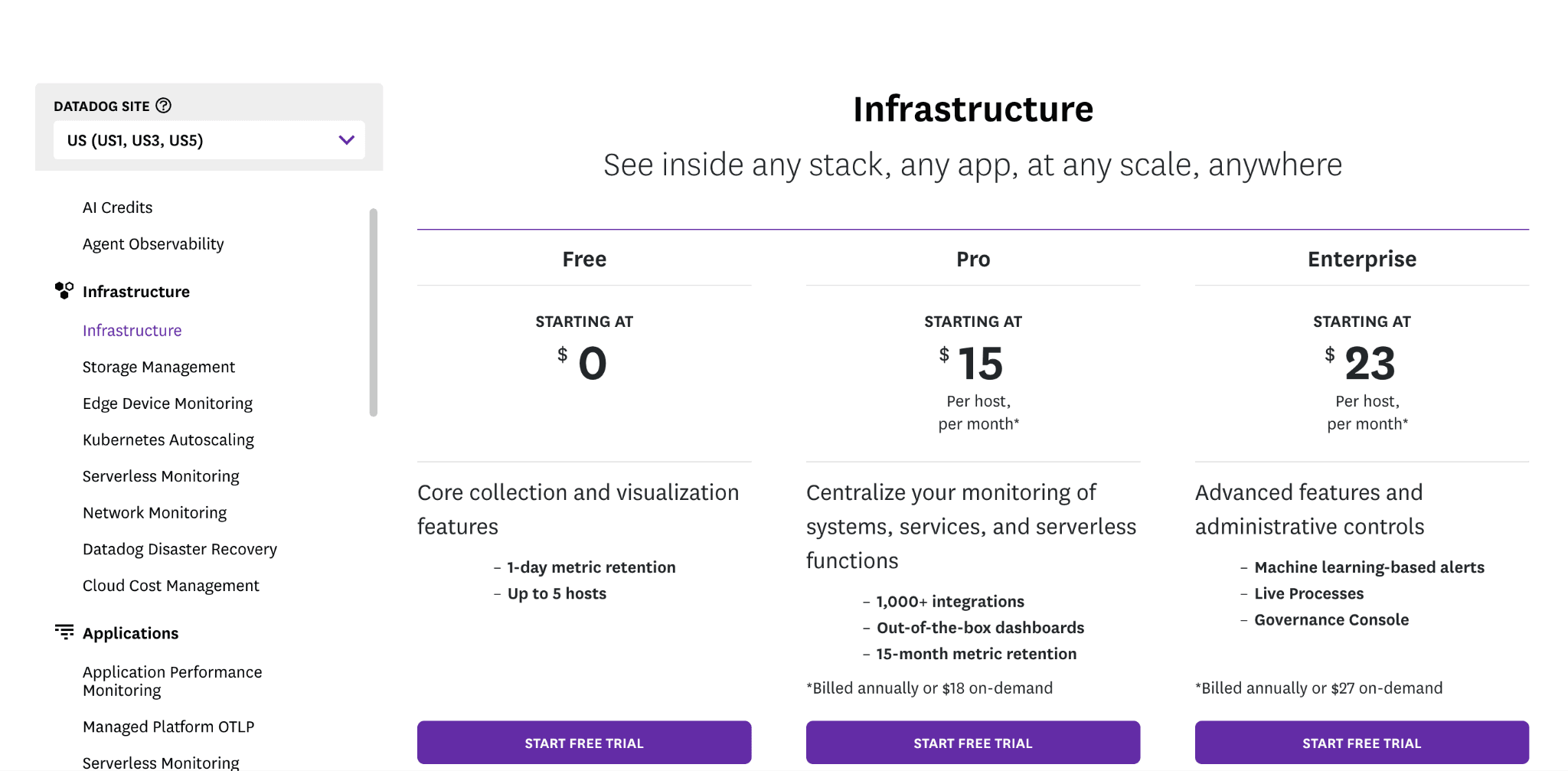
Hybrid pricing combines a fixed subscription base with variable usage fees on top. You pay to get in the door, then pay more based on what you actually use. It's the most common model for scaling B2B SaaS tools today and for good reason.
Think of it as the middle ground between predictability and flexibility. You get baseline revenue, your customer gets cost control.
Pros:
Predictable baseline revenue from the subscription component keeps finance happy
Usage upside means your revenue grows with your customer without renegotiating contracts
Lowers the commitment barrier compared to pure usage-based customers know their floor
Cons:
Two billing components means two things that can break in your billing infrastructure
Getting the base fee to usage ratio right is genuinely hard price the base too high and you kill conversions, too low and you leave money on the table
Customers sometimes feel nickel-and-dimed if the usage fees aren't clearly communicated upfront
For example, Datadog uses a hybrid pricing model in its SaaS offering, combining subscription and usage-based components that scale with enterprise workloads.
Tiered Pricing
Tiered pricing is when you bundle features, usage limits, or seats into fixed plans like Basic, Pro, and Enterprise, each with its own price. Customers pick the plan that suits them now and upgrade when they outgrow it.
It’s the most common and familiar way to price software, and the one most SaaS companies start with.
Pros:
Serves multiple customer segments from one pricing page
Creates a natural upgrade path as customers grow into higher tiers
Easier to communicate than usage-based models, customers know exactly what they're paying
Cons:
Customers just below a tier ceiling resist upgrading even when the next tier makes sense
Too many tiers overwhelm buyers, most SaaS pricing examples that work keep it to three
Features get trapped in tiers they don't belong in just to justify the price jump
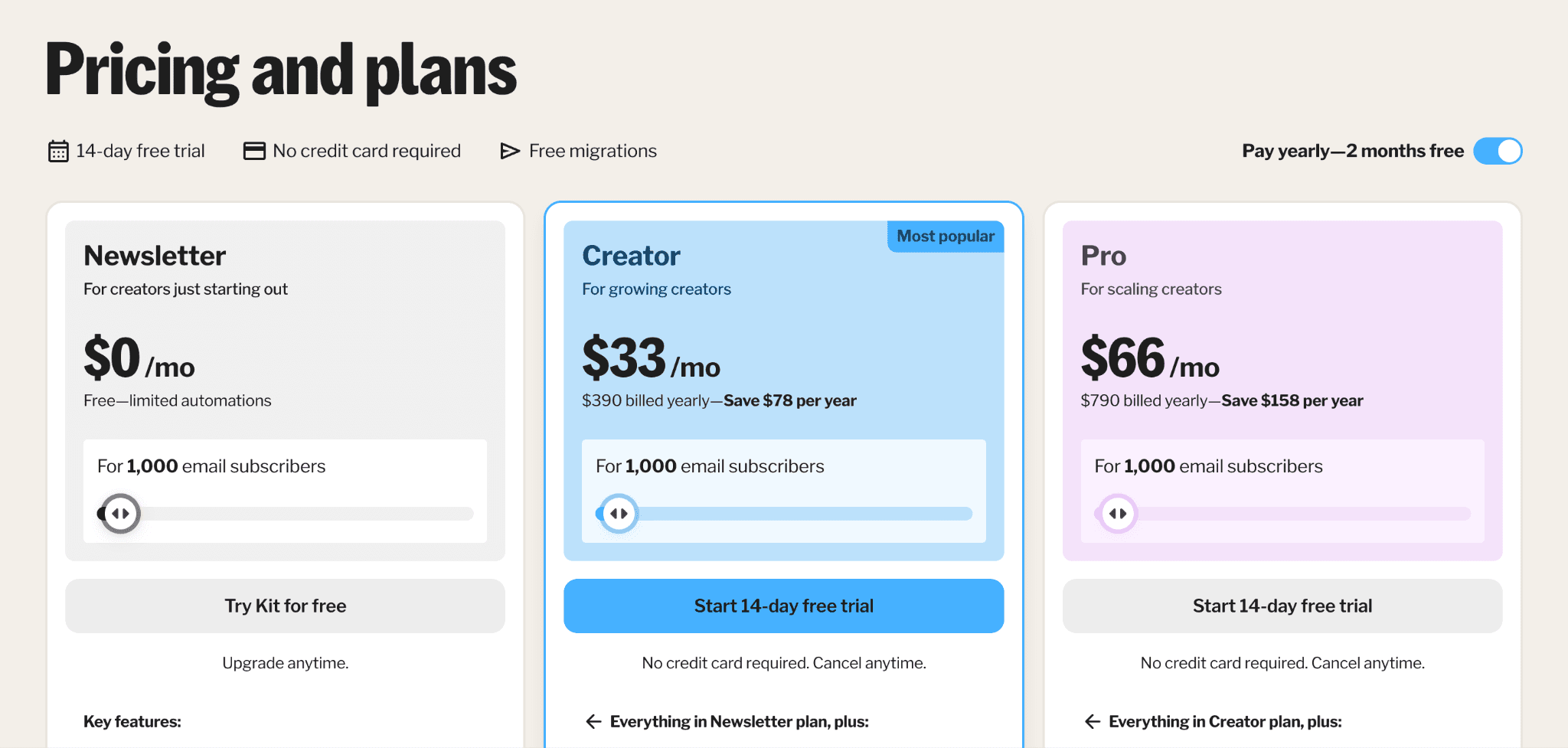
This is a classic textbook example of pricing cards and you can find this in almost every SaaS tool. I like how kit.com has showcase its pricing in clean cards and with a slider to check how much that plan can cost you.
Per-Seat Pricing
Per-seat pricing charges a fixed fee for every user who accesses the product. It’s the infamous pricing strategy that as you add more people to the list you pay more.
10 people on your team, 10 seats.
It's the default model for collaboration tools, CRMs, and anything where the value scales with team size.
Pros:
Revenue grows predictably as your customer's team grows
Easy to understand customers can calculate their cost in seconds
Works well when every user gets roughly equal value from the product
Cons:
Incentivises login sharing, one account, five people, zero extra revenue for you
Penalises large teams with occasional users who don't justify the per-seat cost
Breaks down entirely for AI tools where value comes from consumption, not headcount
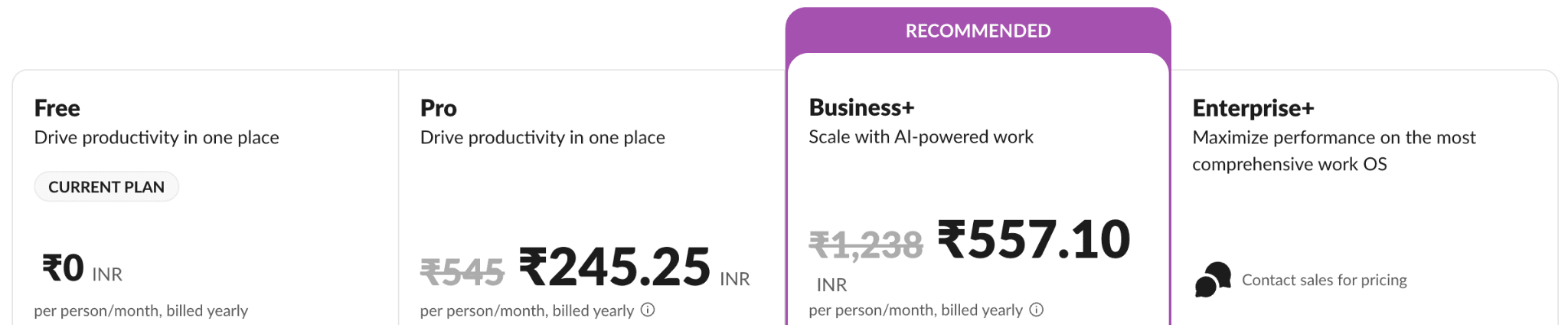
Slack can be a classic example of per-seat based pricing strategy. Slack charges on the basis of per person and per month basis so when you add more people it naturally increases your bill.
Outcome-Based Pricing
Outcome-based pricing is the most ambitious SaaS pricing model on this list. You don't charge for access or usage, you charge based on the result the customer actually gets. And this is extremely hard to nail right. The only company I think who has implemented this successfully is Intercom.
Because with outcome based pricing you need to think more about the point that what not to charge for. And that can either make your pricing model successful or fail it miserably.
Pros:
Perfect alignment between what you charge and the value you deliver customers are happy to pay when they can see the ROI
Builds deep trust and long-term relationships because your incentives are identical
Positions you as a partner, not a vendor hard to commoditise
Cons:
Measuring outcomes is genuinely hard, attribution gets messy fast when other variables affect the result
Revenue becomes unpredictable in ways that make fundraising and forecasting painful
Customers can game the metrics if the contract isn't airtight
How to choose the right saas pricing model for your business?
Choosing the ideal pricing strategy is more important than you think. Because this will determine your growth and it should communicate the value they can get from spending $$$.
As per your product
Before you get all excited about the available pricing models you need to step back and think about the nature of your product. The first question to ask is, what does a customer actually consume when they use it?
Some products have a clear unit of value.
An AI transcription tool consumes minutes
A messaging API consumes messages sent
A vector database consumes queries or storage.
When your product has a natural unit like this, usage-based pricing maps directly to how value is delivered. Customers pay more as they get more, which feels fair, and your revenue grows as they grow.
Other products don't have a single, clean unit. A project management tool, a CRM, a design platform. The value is more ambient.
You're paying for access to a system, not consumption of a resource. Seat-based or flat subscription pricing makes more sense here because the customer's usage is continuous and hard to attribute to discrete events.
The question to ask yourself, if a customer doubles their usage of your product, do they get roughly twice the value? If yes, usage-based pricing probably fits. If the answer is "it depends" or "not really", you're likely looking at a seat or subscription model.
Now the next category is value based pricing or outcome based pricing. If your product helps a finance team close books faster, or helps a recruiter fill roles, the customer's mental model of value is the result, not the hours or API calls.
That's where outcome-based or success-fee models start to make sense, even if they're harder to implement.
As per your goals
If you're in early growth and your priority is getting customers through the door, a freemium or free trial with a low entry price lowers the barrier to first value.
Here seat-based pricing with a low per-seat cost works well here because the sales conversation is simple and expansion revenue comes naturally as teams grow.
If you're focused on revenue predictability, flat subscription pricing is what will get you $$$. You know exactly what you'll make each month. It makes forecasting easier and investors happier. The tradeoff is that you cap your upside from customers who use your product heavily.
If you're trying to maximize revenue from your best customers, usage-based pricing with a ceiling or commitment tier will get more value from high-volume users without overcharging the small ones.
As per your customers
How does your customer think about value?
A developer paying for an API has a natural mental model of cost-per-call. They can calculate ROI quickly. Showing them a per-token or per-request price feels natural. Showing them a flat monthly subscription without a clear per-unit frame makes them nervous because they can't calibrate.
There's also the question of who inside the company makes the buying decision. If your buyer is a developer or technical lead, they usually prefer usage-based pricing because they understand the underlying mechanics and can justify the cost to their team.
If your buyer is a VP or business owner, they prefer predictable pricing because variability in a monthly invoice creates noise in their financial reporting.
Consider your customer's growth trajectory. If your customers are themselves growing fast, usage-based pricing means your revenue grows with them automatically, without requiring a sales call to upsell. If your customer base is more stable or cost-sensitive, locking in flat pricing gives them comfort and reduces churn risk.
How to test and refine your SaaS pricing model?
Picking a pricing model is not a set-and-forget thing. It's the starting point for a longer experiment.
The companies that get pricing right over time aren’t the ones who picked the perfect model on day one. They're the ones who kept testing after launch.
Here’s how to think about the testing your SaaS pricing
Start with new customers, not existing ones
The instinct is to run a price change across your entire base and see what happens. Don't. New customers have no baseline. They're not comparing your new price to what they used to pay.
They're evaluating your product against competitors at current market rates, which makes them far better test subjects for price sensitivity. Once you've validated a new price with new signups, you'll have the data to make a confident call about migrating existing customers.
Pick the right segment within that group
Not all new customers give you equally fast feedback. Monthly subscribers show you results in 30 days. Annual customers take a year. If you're testing a price change, target monthly cohorts first, even if you eventually want to roll it out to annual plans too.
You can also focus on users 30 to 60 days from renewal, where purchase decisions are imminent and feedback arrives quickly.
Change one thing at a time
Most pricing experiments fail at the analysis stage because teams bundle too many variables together. New price plus new feature plus revised plan limits, and then when conversion drops, nobody can diagnose why.
Test one variable. Keep everything else constant. A 10-20% price increase is a reasonable starting range: meaningful enough to matter financially, small enough that engaged users won't flinch.
Roll out small and watch early signals.
Start with 5-10% of your target segment. You don't need to wait until renewal to know if something is broken. Users cancel throughout the month, not just on day 30.
Within the first two weeks, you'll see early cancellation patterns, plan downgrades, and support tickets mentioning price. These are your signals. If they look clean, expand to 15%, then 50%, then full rollout.
Match cohorts properly when you analyze
A user in month one behaves differently than a user in month six, regardless of price. If your test group skews toward new signups and your control group is full of longtime customers, your data will mislead you.
Compare users at the same lifecycle stage: 30-day users against other 30-day users, annual renewals against annual renewals.
Don't call the experiment too early
Early data on pricing changes is almost always misleading. Conversion might look great in week one and then fall apart once promo periods expire or expansion behavior sets in. Wait four to six weeks before drawing conclusions.
The question you're trying to answer isn't just "did conversion hold?" It's whether net revenue after 90 days is positive, whether customers who converted at the higher price are expanding or quietly downgrading, and whether churn is stable across the full cohort.
A small piece of advice from me is that engaged users are more open to price increases than most founders expect.
If someone has embedded your product into their daily workflow, they're thinking about ROI, not about finding a reason to cancel.
The segmentation matters though. That calculus only holds for users who are actually getting value. Someone who signed up six months ago and logs in twice a year is a different conversation entirely.
SaaS pricing isn’t a set and forget mechanism
The pricing model that gets you to your first hundred customers might actively hurt you at a thousand.
The price point that felt ambitious at launch might be leaving serious money on the table two years later. That's not a failure of planning. It's just how SaaS pricing works. Your product changes, your customers change, and your pricing should too.
What separates the companies that figure this out from the ones that don't isn't picking the right model on day one. It's building the habit of treating pricing as an ongoing experiment rather than a one-time decision.
Pick a model that maps to how your product delivers value. Sanity checks it against your goals and your buyers. Then test it, watch the signals, and adjust.
The worst version of this is freezing. Keeping prices static for years because changing them feels risky, while your costs go up, your product gets better, and your customers quietly wonder why you haven't asked them to pay more yet.
Start somewhere. Test small. The pricing model you ship tomorrow doesn't have to be the one you keep forever. It just has to be good enough to learn from.
What is SaaS pricing?
What pricing model is best for API / AI products?
How do I avoid bill shock?
How can Flexprice help?
What are the 4 types of pricing?